Your Machine Has Two Jobs
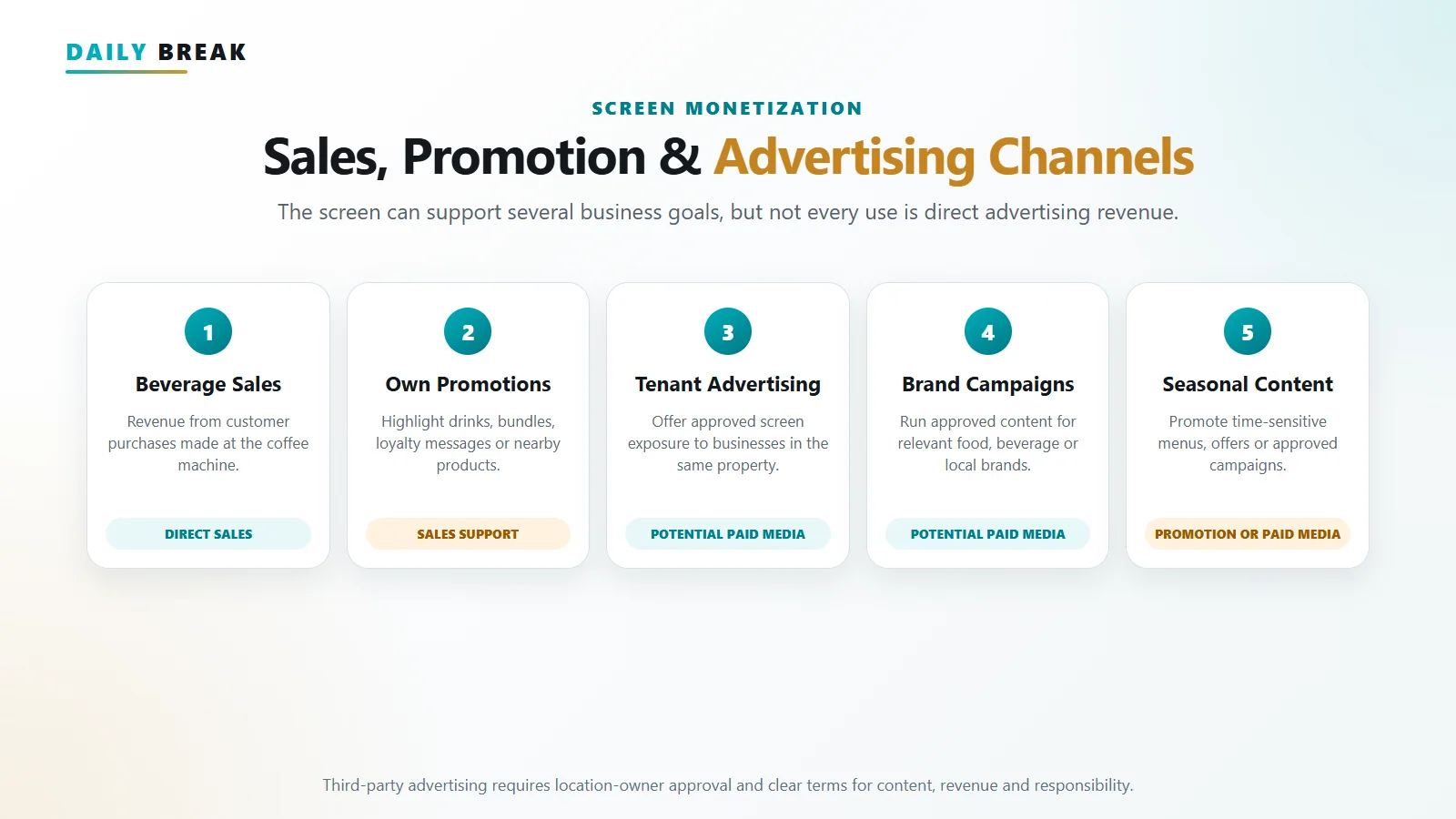
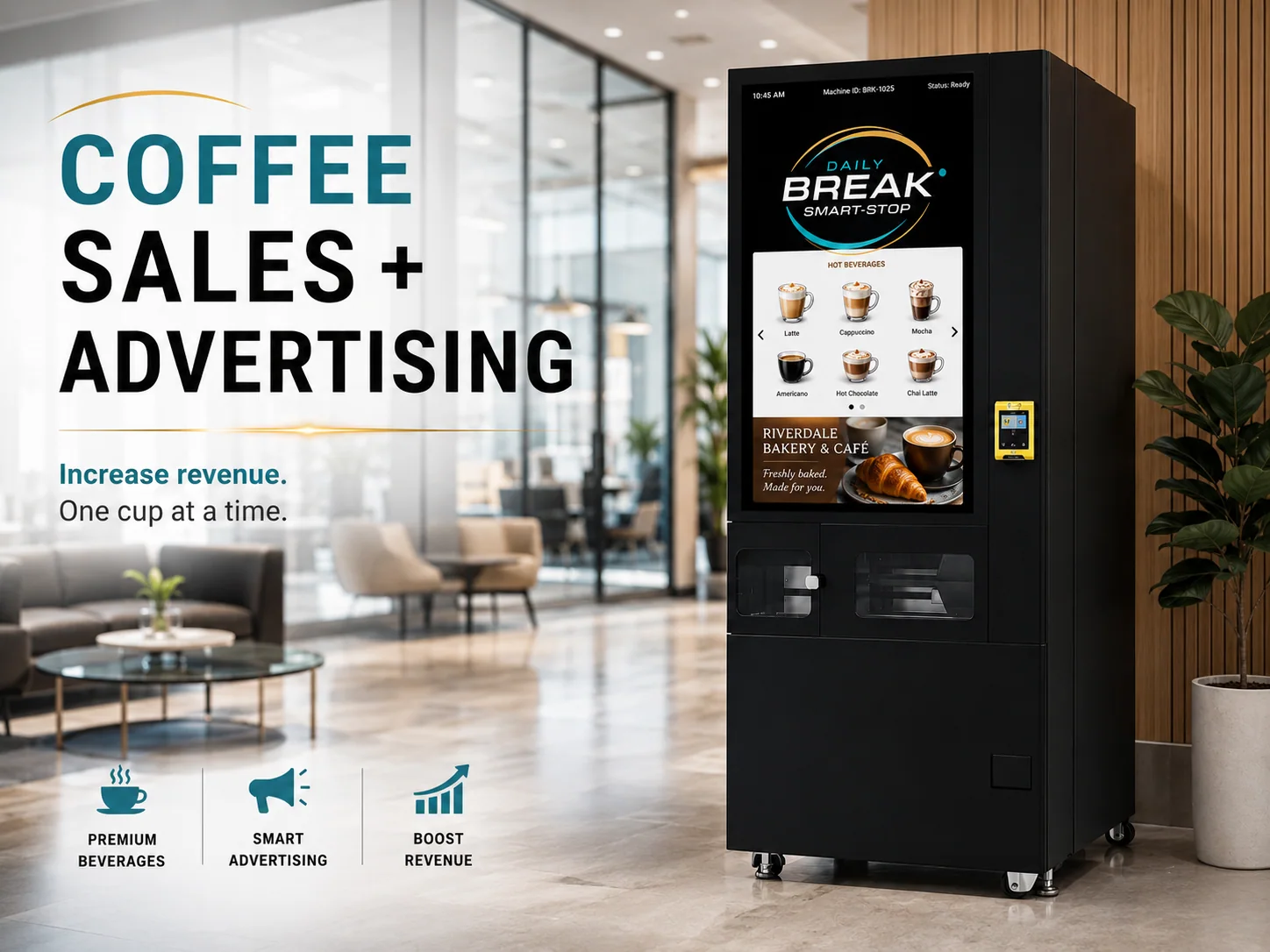
A coffee machine serves beverages, and its large screen can also present useful content. Depending on the installed software and approved location plan, that content may support drink sales, explain the menu, promote the operator's offers, build the brand or create an additional paid-advertising opportunity.
Advertising income is not automatic. Confirm that the software supports the intended image, video and scheduling workflow, and obtain the location owner's written approval before selling any third-party placement.
1. Sell Advertising Time to Local Businesses
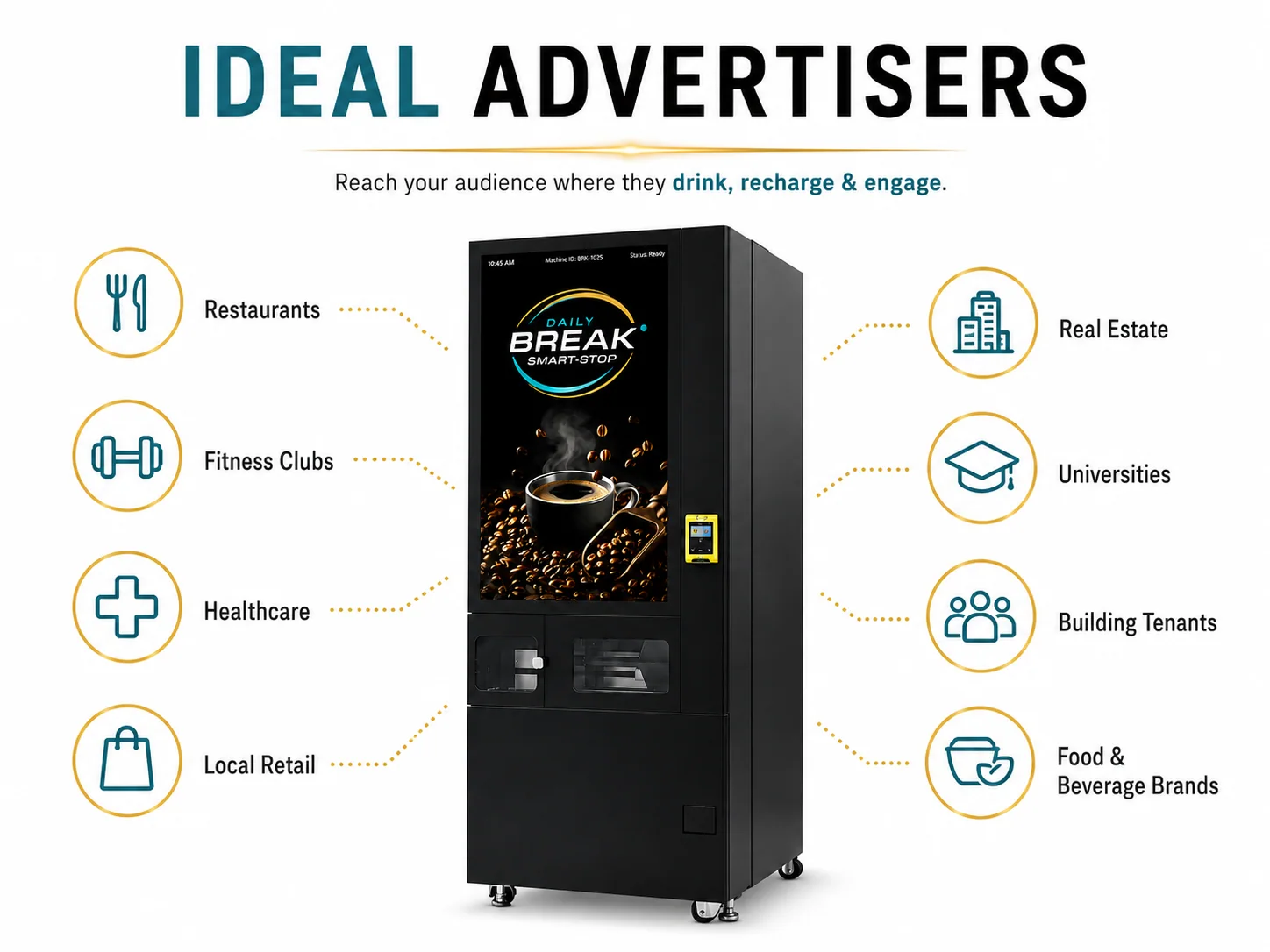
Nearby restaurants, fitness studios, clinics, retailers, automotive services, education providers and other businesses may value exposure to a relevant local audience. Treat them as potential advertisers, not guaranteed buyers. Define audience, placement, schedule, term and reporting without promising results you cannot measure.
2. Advertise Brands and Manufacturers
Compatible coffee, syrup, snack, dessert or wellness brands may be interested in point-of-purchase visibility. The ad must accurately reflect the products available at that machine and follow both brand and location rules.
3. Run Paid Seasonal Campaigns
Seasonal moments can provide a campaign theme, but a campaign generates advertising revenue only when a third party agrees to pay. Label concept mockups clearly and never publish invented discounts as real offers.
4. Promote Your Own Offers
Use the screen to explain menu choices, highlight configured seasonal drinks or promote a valid loyalty or bundle offer. This is sales promotion, not advertising income by itself. Display only features and prices that are active at that location.
5. Sell Ad Time to Tenants
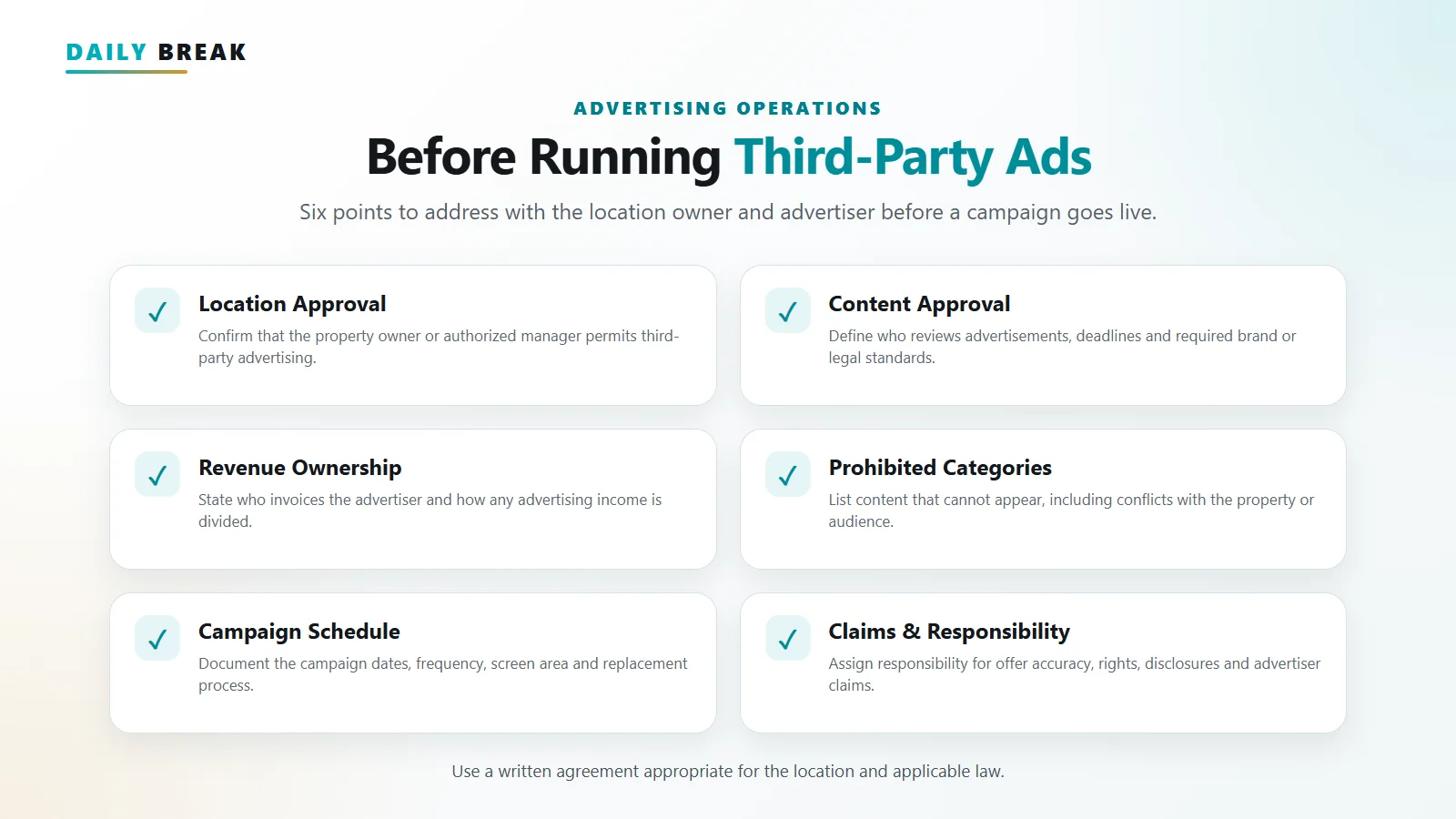
In a hotel, office, mall, campus or residential building, other tenants may be relevant candidates. First confirm who owns the screen inventory and advertising revenue under the machine placement agreement.
6. Build Your Own Brand
When no paid campaign is running, content can tell the Daily Break or operator story, explain service standards and make the station easier to use. Keep messages short and avoid interfering with ordering or accessibility.
How It Works in Practice
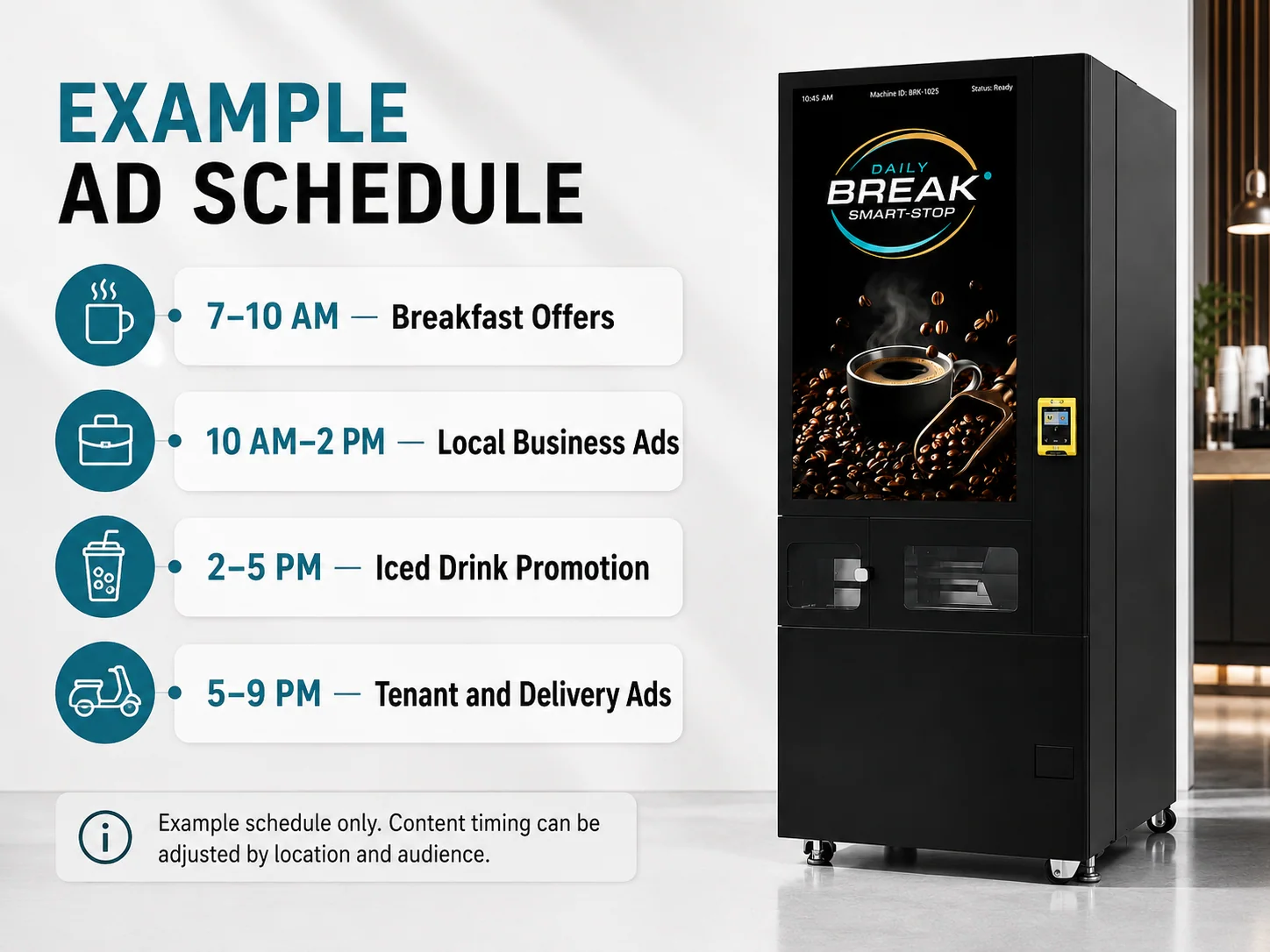
Create a content inventory, verify the installed software capabilities, define safe file specifications, obtain approvals, schedule only supported placements and record when each asset runs. Report impressions only when a defensible measurement method exists.
A written advertising agreement should cover location-owner approval, content review, prohibited categories, schedule, pricing, cancellation, reporting, ownership of revenue and responsibility for every claim. Use the ROI calculator for scenario planning, not as a guarantee.
Tu máquina tiene dos trabajos
Una cafetera sirve bebidas y su pantalla grande también puede mostrar contenido útil. Según el software instalado y el plan aprobado, puede apoyar ventas, explicar el menú, promover ofertas propias, construir marca o crear una oportunidad adicional de publicidad pagada.
El ingreso publicitario no es automático. Confirma que el software admite imágenes, video y programación previstos, y obtén aprobación escrita del propietario antes de vender espacios a terceros.
1. Vende tiempo publicitario a negocios locales
Restaurantes, gimnasios, clínicas, comercios, servicios automotrices y centros educativos cercanos pueden valorar una audiencia local relevante. Son anunciantes potenciales, no compradores garantizados. Define audiencia, ubicación, calendario, plazo e informes sin prometer resultados no medidos.
2. Anuncia marcas y fabricantes
Marcas compatibles de café, jarabes, snacks, postres o bienestar pueden interesarse en visibilidad en el punto de compra. El anuncio debe corresponder a los productos disponibles y cumplir las reglas de la marca y del lugar.
3. Lanza campañas de temporada de pago
Las temporadas aportan un tema, pero solo hay ingreso publicitario cuando un tercero acepta pagar. Identifica claramente los conceptos y no publiques descuentos inventados como ofertas reales.
4. Promociona tus propias ofertas
Explica el menú, destaca bebidas de temporada configuradas o una promoción válida. Es promoción de ventas, no ingreso publicitario por sí sola. Muestra solo funciones y precios activos.
5. Vende tiempo a los inquilinos
En hoteles, oficinas, centros comerciales, campus o residencias, otros inquilinos pueden ser candidatos. Confirma primero quién controla el inventario publicitario y los ingresos según el contrato de ubicación.
6. Construye tu propia marca
Cuando no haya campaña pagada, el contenido puede contar la historia del operador, explicar el servicio y facilitar el uso. Mantén mensajes breves y no interfieras con el pedido o la accesibilidad.
Cómo funciona en la práctica
Crea un inventario de contenido, verifica capacidades del software, define archivos seguros, consigue aprobaciones, programa solo ubicaciones compatibles y registra cuándo se muestra cada pieza. Informa impresiones únicamente con un método de medición defendible.
El acuerdo debe cubrir aprobación del propietario, revisión de contenido, categorías prohibidas, calendario, precio, cancelación, informes, propiedad de ingresos y responsabilidad por afirmaciones. Usa la calculadora de ROI para escenarios, no como garantía.
У вашего автомата две работы
Кофейный автомат готовит напитки, а его большой экран может показывать полезный контент. В зависимости от установленного ПО и согласованного плана он может поддерживать продажи, объяснять меню, продвигать собственные предложения, развивать бренд или создавать дополнительную возможность платной рекламы.
Рекламный доход не возникает автоматически. Проверьте, что ПО поддерживает нужные изображения, видео и расписание, и получите письменное разрешение владельца локации до продажи сторонних размещений.
1. Продавайте рекламное время местному бизнесу
Рестораны, фитнес-студии, клиники, магазины, автосервисы, учебные центры и другие компании рядом могут заинтересоваться релевантной местной аудиторией. Это потенциальные рекламодатели, а не гарантированные покупатели. Определите аудиторию, место, график, срок и отчётность без обещаний неизмеримых результатов.
2. Рекламируйте бренды и производителей
Совместимые бренды кофе, сиропов, снеков, десертов или wellness-продуктов могут быть заинтересованы в видимости в момент покупки. Реклама должна соответствовать товарам в аппарате и правилам бренда и локации.
3. Запускайте платные сезонные кампании
Сезон даёт тему кампании, но рекламный доход появляется только по платному соглашению с третьей стороной. Чётко помечайте концепты и не выдавайте выдуманные скидки за реальные предложения.
4. Продвигайте свои предложения
Объясняйте меню, показывайте настроенные сезонные напитки или действующее предложение лояльности. Само по себе это продвижение продаж, а не рекламный доход. Показывайте только активные функции и цены.
5. Продавайте время арендаторам
В отеле, офисе, торговом центре, кампусе или жилом комплексе другие арендаторы могут быть подходящими кандидатами. Сначала уточните по договору, кому принадлежат рекламные места и доход.
6. Развивайте собственный бренд
Когда платной кампании нет, контент может рассказать об операторе, объяснить стандарты сервиса и сделать станцию понятнее. Сообщения должны быть короткими и не мешать заказу и доступности.
Как это работает на практике
Составьте перечень контента, проверьте возможности ПО, задайте безопасные требования к файлам, получите согласования, планируйте только поддерживаемые размещения и фиксируйте время показа. Отчитывайтесь о показах, только если есть обоснованный метод измерения.
Договор должен определять разрешение владельца, согласование контента, запрещённые категории, график, цену, отмену, отчётность, право на доход и ответственность за утверждения. Используйте калькулятор ROI для сценариев, а не как гарантию.