Why Vending Can Be a Practical Business in 2026
A vending operation can sell during the hours a location is accessible without staffing a retail counter. It is not passive income: the operator still manages locations, inventory, cleaning, maintenance, customer issues, accounting and compliance. The strongest starting point is a small, measurable operation built around a real customer need.
Step 1: Choose Your Niche
Grab-and-go food and drinks: AI Smart Coolers can support a flexible mix of compatible packaged products without coil restrictions.
Freshly prepared beverages: a Commercial Coffee Vending Machine can suit hotels, offices and other locations that need a self-service coffee station.
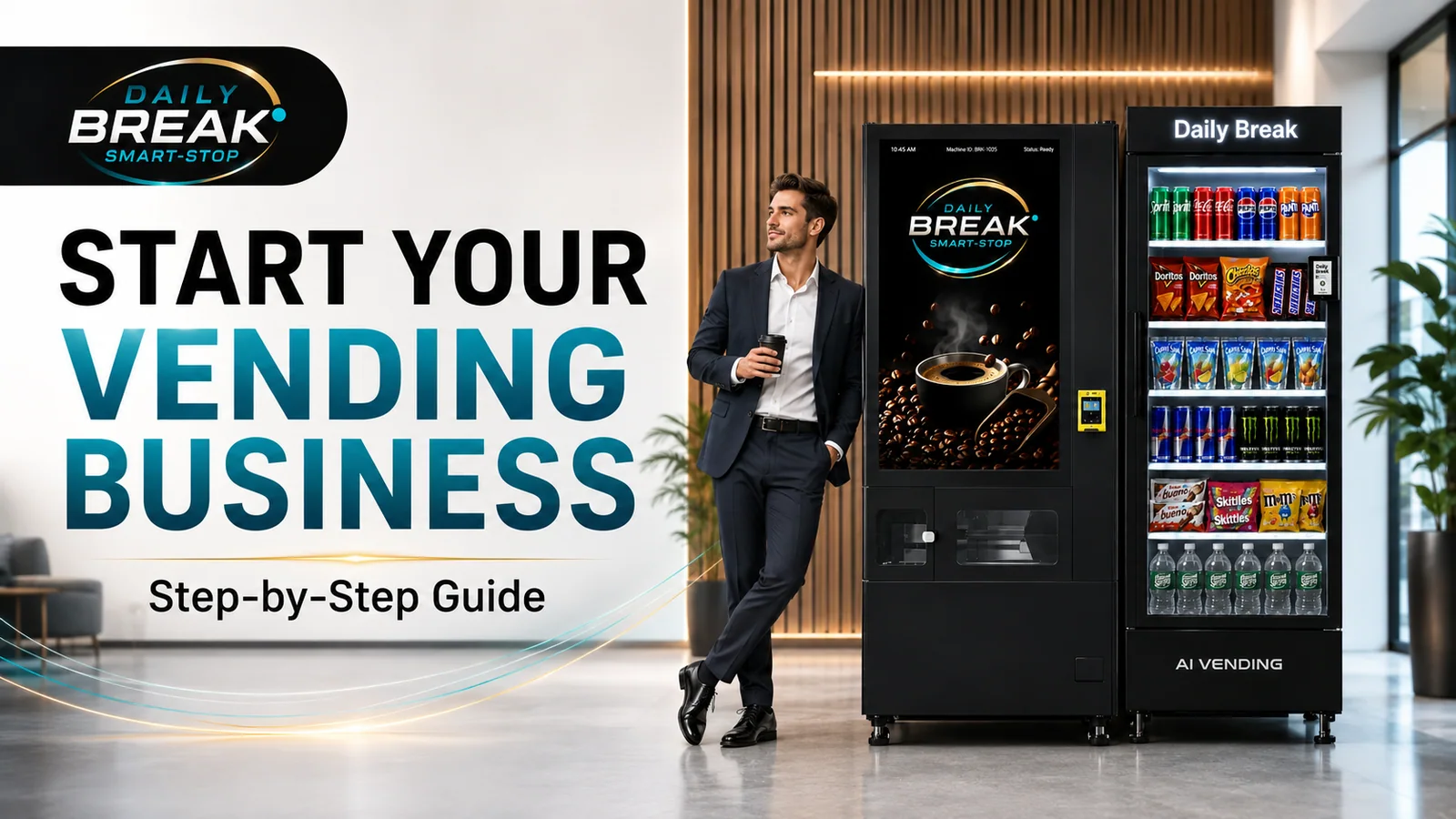
Combined service: a coffee machine and Smart Cooler can serve different dayparts, but each additional unit increases inventory, cleaning and service responsibilities.
Step 2: Calculate Your Startup Budget
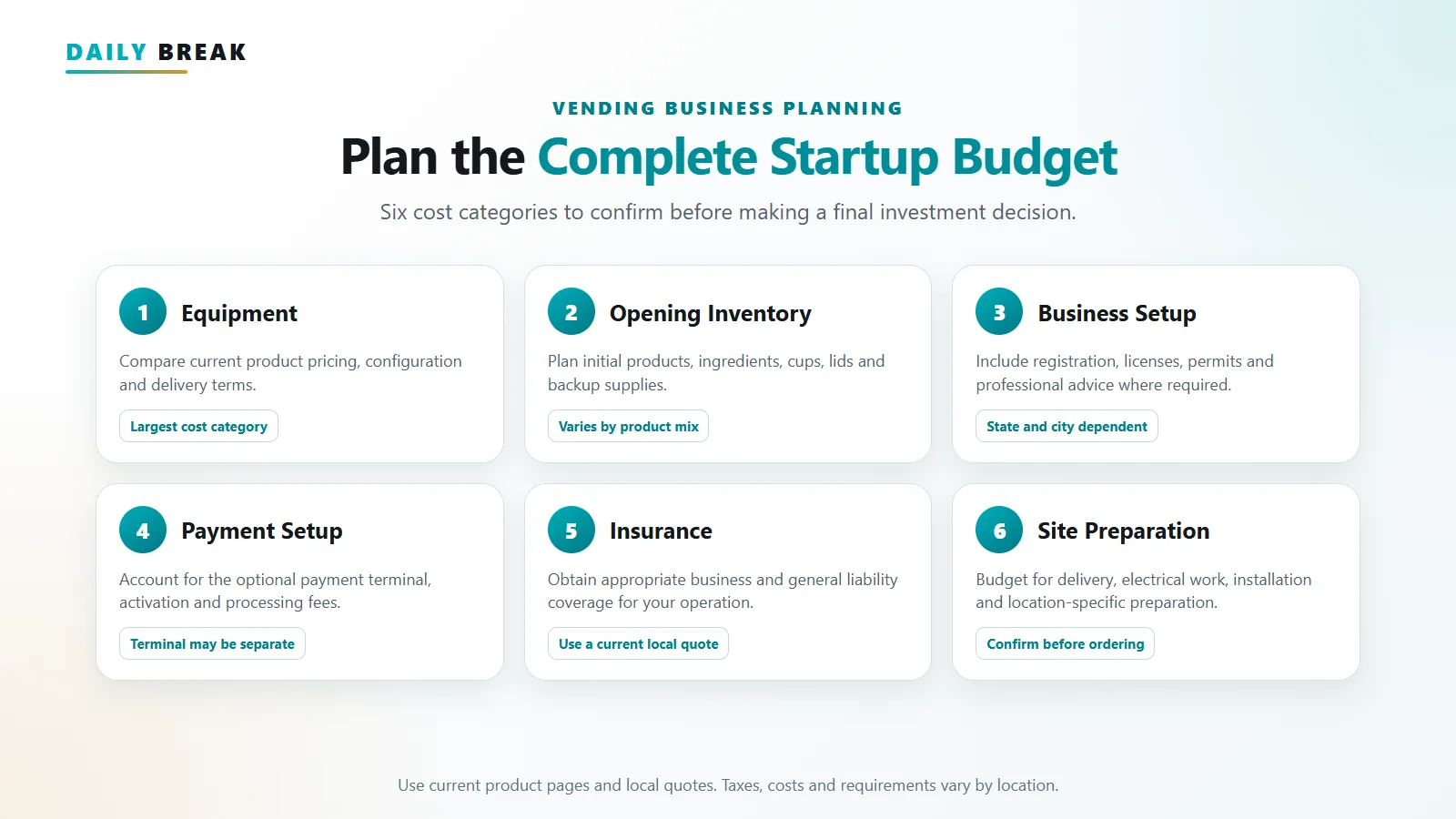
Build the budget from current written quotes rather than an evergreen total. Include equipment and selected options, initial inventory and consumables, business formation, licenses and permits, insurance, payment hardware and processing, delivery, installation, electrical or network work, sales tax obligations and working capital.
The payment terminal is a separate purchase unless a specific written offer says it is included. Prices and configurations can change, so date every quote used in your model.
Step 3: Find Your First Location
Count relevant traffic at the hours the site is accessible. Study dwell time, nearby alternatives, customer profile, security, delivery access, electrical supply and connectivity. A busy building is not automatically a good location if most visitors pass the machine without a reason to buy.
Top Locations by Revenue Potential
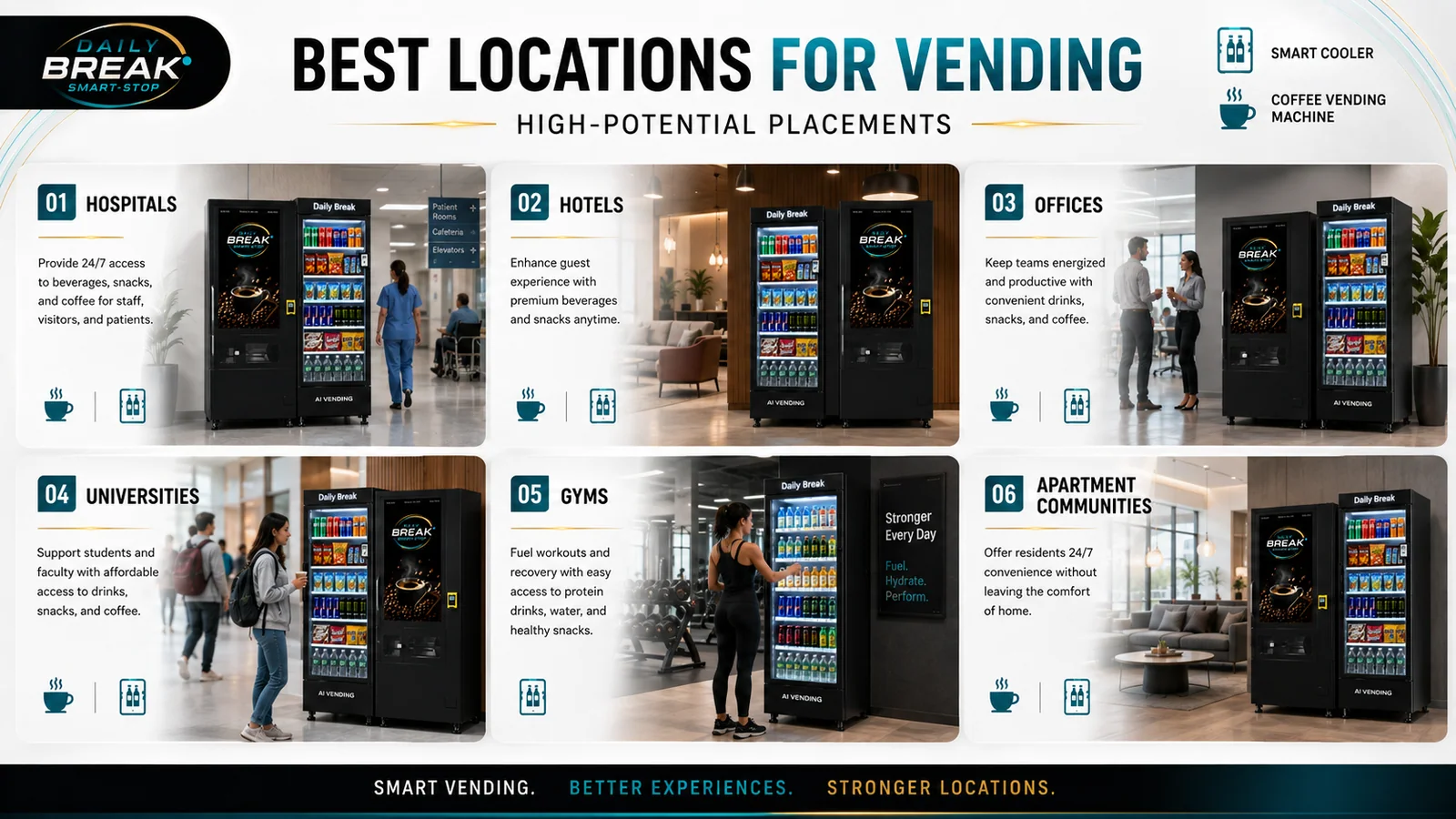
Hospitals, hotels, offices, campuses, gyms and residential communities can be worth evaluating. These are examples, not revenue guarantees. Product mix and service level should match the people using the site.
How to Approach Location Owners
Present the equipment, service schedule, responsibility for cleaning and repairs, insurance, proposed commercial terms and the benefit to employees, guests or residents. Put the term, placement, utilities, revenue share or rent, access, exclusivity, removal rights and termination notice in a written agreement.
Step 4: Legal Requirements
Requirements vary by state, county, city, product type and location. Confirm business registration, tax permits, food or health permits, labeling, accessibility, insurance and contract requirements with the appropriate authorities and qualified advisers before operating.
Step 5: Set Your Pricing Strategy
Calculate landed product cost, processing fees, location share, waste, labor, travel, software, utilities, maintenance and taxes. Then test prices against local alternatives and customer response. A target margin is useful only when every material cost is included.
Step 6: Scale Your Business
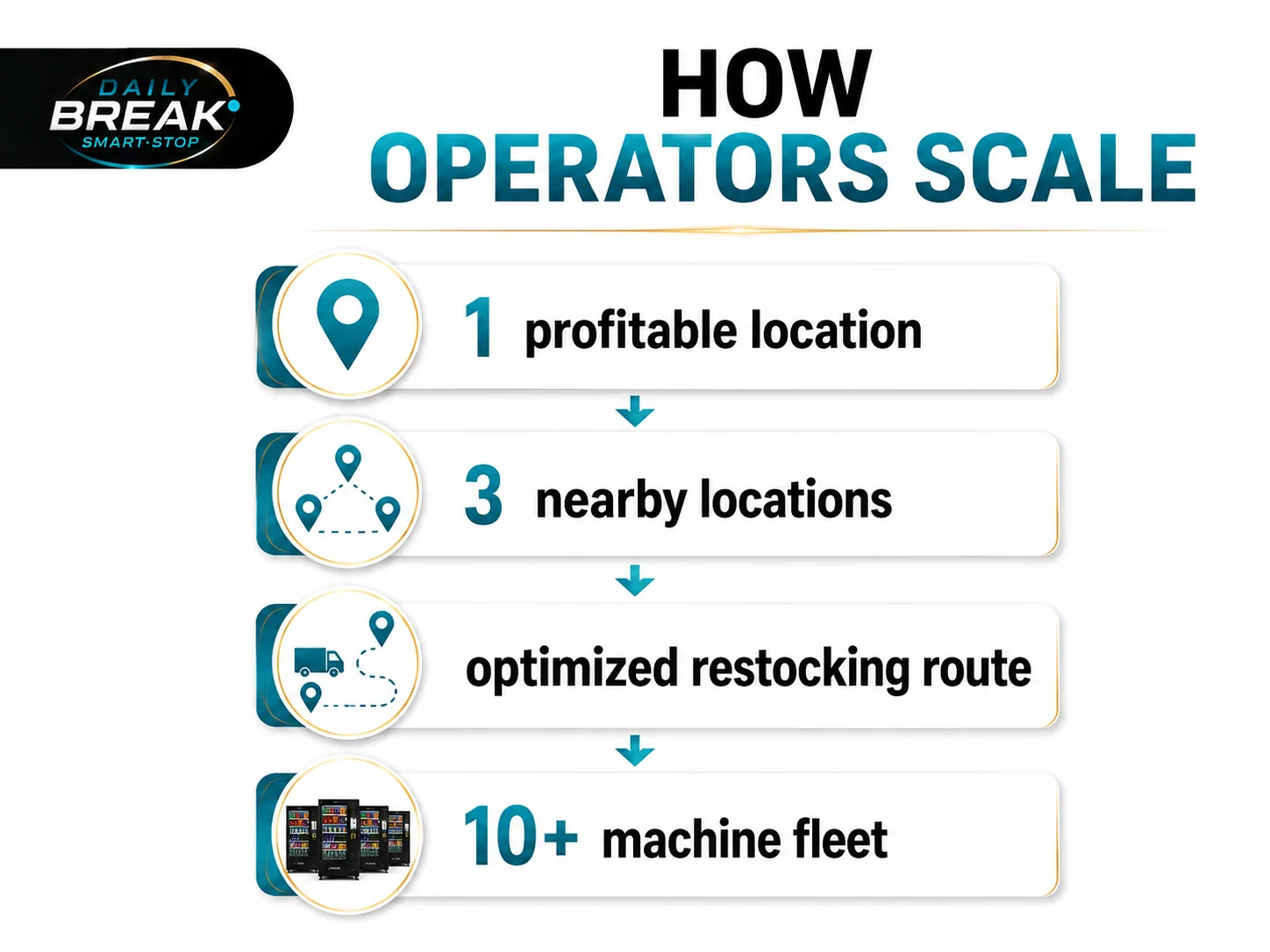
Scale after the first location produces enough reliable data. Review sales by item and hour, stockouts, waste, route time, service issues and the full operating result. Add nearby locations gradually, standardize procedures and keep enough working capital for inventory and repairs.
Request a current equipment quote and build the plan from your actual location, configuration and costs.
Example Startup Budget (Two-Machine Setup)
The figures below are approximate examples to help you plan. Your actual costs will depend on equipment selection, location, permits and local regulations.
| Expense | Low End | High End |
|---|---|---|
| 2 machines (AI Smart Cooler + Coffee) | $5,350 | $11,750 |
| Initial inventory | $300 | $800 |
| Business registration & insurance | $200 | $600 |
| Payment processing setup | $0 | $100 |
| Total Startup | $5,850 | $13,250 |
Por Qué el Vending Puede Ser un Negocio Práctico en 2026
Una operación de vending puede vender durante las horas de acceso del lugar sin personal en un mostrador. No es ingreso pasivo: el operador gestiona ubicaciones, inventario, limpieza, mantenimiento, atención al cliente, contabilidad y cumplimiento. El mejor comienzo es una operación pequeña y medible basada en una necesidad real.
Paso 1: Elige Tu Nicho
Alimentos y bebidas para llevar: los AI Smart Coolers admiten una mezcla flexible de productos empacados compatibles sin las limitaciones de las espirales.
Bebidas recién preparadas: una Commercial Coffee Vending Machine puede servir en hoteles, oficinas y otros lugares que necesitan una estación de café de autoservicio.
Servicio combinado: una cafetera y un Smart Cooler pueden cubrir distintos momentos del día, pero cada unidad aumenta el inventario, la limpieza y el servicio.
Paso 2: Calcula Tu Presupuesto Inicial
Crea el presupuesto con cotizaciones escritas y actuales, no con un total permanente. Incluye equipo y opciones, inventario y consumibles, constitución del negocio, licencias, permisos, seguro, terminal y procesamiento de pagos, entrega, instalación, trabajos eléctricos o de red, impuestos y capital de trabajo.
La terminal de pago se compra por separado salvo que una oferta escrita indique lo contrario. Los precios y configuraciones pueden cambiar; registra la fecha de cada cotización.
Paso 3: Encuentra Tu Primera Ubicación
Cuenta el tráfico relevante durante las horas de acceso. Estudia el tiempo de permanencia, alternativas cercanas, perfil del cliente, seguridad, acceso de entrega, electricidad y conectividad. Un edificio concurrido no garantiza ventas.
Mejores Ubicaciones por Potencial de Ingresos
Hospitales, hoteles, oficinas, campus, gimnasios y residencias pueden ser candidatos. Son ejemplos, no garantías de ingresos. La mezcla de productos y el servicio deben adaptarse a los usuarios.
Cómo Acercarte a los Dueños de Ubicaciones
Presenta el equipo, calendario de servicio, responsabilidades, seguro, términos comerciales y beneficio para usuarios. Documenta plazo, ubicación, servicios, participación o renta, acceso, exclusividad, retiro y terminación.
Paso 4: Requisitos Legales
Los requisitos varían por estado, condado, ciudad, producto y ubicación. Confirma registro, impuestos, permisos sanitarios, etiquetado, accesibilidad, seguro y contratos con las autoridades y asesores apropiados.
Paso 5: Establece Tu Estrategia de Precios
Calcula costo del producto entregado, procesamiento, participación del lugar, merma, trabajo, transporte, software, servicios, mantenimiento e impuestos. Después compara con alternativas locales y prueba la respuesta del cliente.
Paso 6: Escala Tu Negocio
Escala cuando la primera ubicación genere datos confiables. Revisa ventas por producto y hora, faltantes, mermas, tiempo de ruta, incidencias y resultado operativo completo. Añade ubicaciones cercanas gradualmente y conserva capital para inventario y reparaciones.
Solicita una cotización actual y crea el plan con tu ubicación, configuración y costos reales.
Presupuesto inicial de ejemplo (configuración de dos máquinas)
Las cifras a continuación son ejemplos aproximados para ayudarle a planificar. Sus costos reales dependerán de la selección de equipos, la ubicación, los permisos y las regulaciones locales.
| Gasto | Mínimo | Máximo |
|---|---|---|
| 2 máquinas (AI Smart Cooler + Coffee) | $5,350 | $11,750 |
| Inventario inicial | $300 | $800 |
| Registro e seguro | $200 | $600 |
| Configuración de pagos | $0 | $100 |
| Total inicial | $5,850 | $13,250 |
Почему вендинг может быть практичным бизнесом в 2026 году
Вендинговая точка может продавать в часы доступа к локации без сотрудника за прилавком. Но это не пассивный доход: оператор отвечает за локации, запасы, чистоту, обслуживание, обращения клиентов, учёт и соблюдение требований. Лучший старт — небольшая измеримая модель, решающая реальную потребность.
Шаг 1: Выберите нишу
Готовые продукты и напитки: AI Smart Cooler позволяет гибко размещать совместимые упакованные товары без ограничений спиралей.
Свежеприготовленные напитки: Commercial Coffee Vending Machine подходит отелям, офисам и другим локациям, где нужна кофейная станция самообслуживания.
Комбинированный сервис: кофейный автомат и Smart Cooler могут работать на разные сценарии спроса, но каждый дополнительный аппарат увеличивает объём запасов, уборки и обслуживания.
Шаг 2: Рассчитайте стартовый бюджет
Составляйте бюджет по актуальным письменным предложениям, а не по одной «вечной» сумме. Учтите оборудование и опции, первоначальный товар и расходники, регистрацию, лицензии и разрешения, страховку, платёжное оборудование и комиссии, доставку, установку, электрику или сеть, налоговые обязательства и оборотный капитал.
Платёжный терминал приобретается отдельно, если в конкретном письменном предложении не сказано иное. Цены и комплектации меняются — указывайте дату каждого предложения.
Шаг 3: Найдите первую локацию
Считайте релевантный трафик в часы доступа. Оцените время пребывания людей, альтернативы рядом, профиль покупателей, безопасность, путь доставки, электричество и связь. Большой общий трафик ещё не гарантирует покупки.
Лучшие локации по потенциалу выручки
Больницы, отели, офисы, кампусы, спортзалы и жилые комплексы стоит рассмотреть. Это примеры, а не гарантия дохода. Ассортимент и сервис должны соответствовать аудитории.
Как выходить на собственников локаций
Покажите оборудование, график обслуживания, распределение ответственности, страховку, коммерческие условия и пользу для сотрудников, гостей или жильцов. Письменно зафиксируйте срок, место, коммунальные услуги, процент или аренду, доступ, эксклюзивность, вывоз и расторжение.
Шаг 4: Юридические требования
Требования зависят от штата, округа, города, типа товара и локации. Уточните регистрацию, налоги, пищевые и санитарные разрешения, маркировку, доступность, страховку и договоры у компетентных органов и специалистов.
Шаг 5: Установите стратегию ценообразования
Посчитайте полную себестоимость товара, комиссии, долю локации, списания, труд, поездки, ПО, коммунальные расходы, обслуживание и налоги. Затем сравните цены с местными альтернативами и проверьте реакцию покупателей.
Шаг 6: Масштабируйте бизнес
Масштабируйтесь после получения надёжных данных первой точки. Анализируйте продажи по товарам и времени, отсутствие товара, списания, длительность маршрута, сервисные проблемы и полный операционный результат. Добавляйте соседние локации постепенно и сохраняйте резерв на товар и ремонт.
Запросите актуальное предложение и стройте план на основе своей локации, комплектации и расходов.
Пример стартового бюджета (два автомата)
Приведённые ниже цифры — приблизительные примеры для планирования. Ваши реальные расходы зависят от выбора оборудования, локации, разрешений и местных требований.
| Расход | Минимум | Максимум |
|---|---|---|
| 2 автомата (AI Smart Cooler + Coffee) | $5,350 | $11,750 |
| Начальный запас | $300 | $800 |
| Регистрация и страховка | $200 | $600 |
| Настройка платежей | $0 | $100 |
| Итого | $5,850 | $13,250 |